URL :

As global mobility continues to increase and climate change and population aging accelerate, the likelihood of emerging infectious diseases is steadily rising. Through the COVID-19 pandemic, we have come to realize that infectious diseases extend far beyond the realm of healthcare, profoundly affecting all aspects of society.
In this context, establishing a sustainable system for securing research resources through global collaboration is essential to prevent the early introduction of infectious diseases and to enable the rapid development of diagnostics, vaccines, and therapeutics. However, it remains challenging for domestic research institutions alone to secure sufficient human-derived materials and pathogen resources related to infectious diseases. This underscores the growing importance of close partnerships with overseas research institutions.
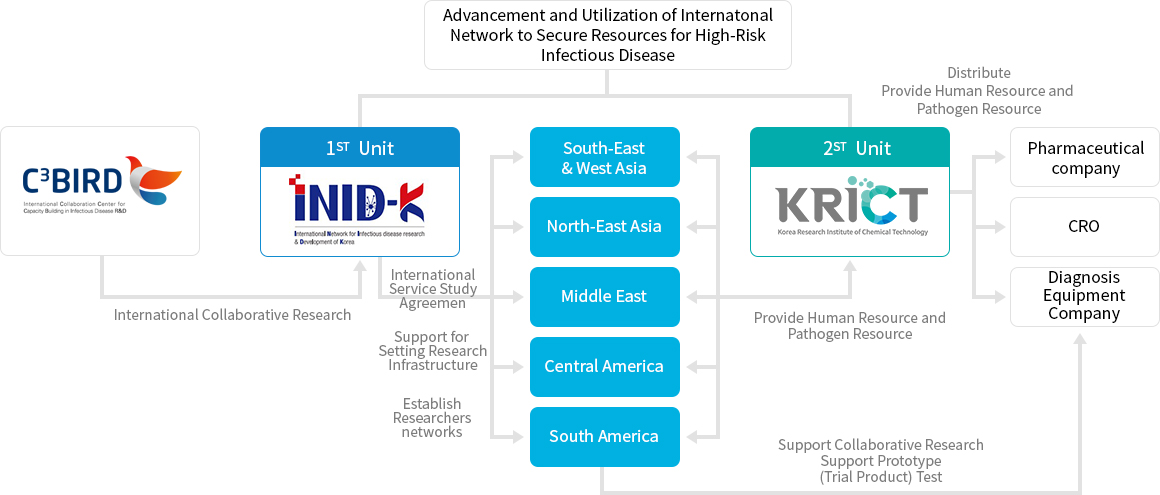
Launched in November 2020, the “Advancement and Utilization of an International Network for Securing High-Risk Infectious Disease Resources,” known as INID-K (International Network for Infectious Disease Research & Development of Korea), achieved meaningful outcomes in international collaboration, resource acquisition, and research support through 2024. In recognition of these accomplishments, the project was selected as a policy support initiative under the Bio & Medical Technology Development Program of the Ministry of Science and ICT. Since April 2025, INID-K has been focusing on expanding its global network and further strengthening its research support framework.
To date, INID-K has established partnerships with 17 institutions across 16 countries in Asia, South America, the Middle East, and other regions. Through these collaborations, more than 6,000 human-derived and pathogen resources have been collected and distributed to domestic researchers. These resources have supported over 20 research projects, including the development of diagnostic devices and therapeutics across basic, translational, and clinical research stages. In addition, collaborative efforts with overseas partner institutions have led to multiple prototype evaluations and clinical trials, serving as a practical bridge connecting global resources with domestic research and development.
Furthermore, to promote communication and knowledge exchange among researchers and experts worldwide, INID-K has hosted the annual International Symposium for Cooperation on Infectious Diseases (ISCID). This platform has gone beyond academic exchange, fostering tangible partnerships and collaborative research initiatives among participating institutions.
Looking ahead, INID-K aims to further strengthen its existing network while expanding cooperation beyond Asia and Latin America to include Africa. By doing so, we seek to advance diversified research collaborations that reflect the varying characteristics and transmission risks of infectious diseases worldwide. At the same time, we will enhance our resource distribution system to ensure that secured materials are utilized more systematically by domestic researchers and translated into practical product development.
INID-K remains committed to building a proactive research foundation against infectious diseases in close collaboration with our global partners, and to developing a sustainable model of international cooperation that contributes to global health security.
Thank you.